 The NIOSH Health Hazard Evaluation (HHE) Program evaluated potential exposures at a college’s sculpture studios. Investigators recommended that managers correct safety hazards in the studios and substitute a less toxic plastics adhesive that does not contain methylene chloride. To reduce exposure to welding fumes, it was recommended that adequate outdoor and replacement air be supplied to the sculpture studios and local exhaust ventilation be installed in the metalworking studio.
http://www.cdc.gov/niosh/hhe/reports/pdfs/2007-0167-3078.pdf
Showing posts with label NIOSH. Show all posts
Showing posts with label NIOSH. Show all posts
Friday, June 5, 2009
Sculpture studio exposure study


Tuesday, March 31, 2009
New chemical reference pages from NIOSH
 In March, National Institute for Occupational Safety and Health (NIOSH) added six pages to their list of chemicals covered under their Occupational Safety and Health Topics. The six new pages cover 2-Butoxyethanol, Methyl Alcohol (Methanol), Phenol, Hydrazine, Chloroform, and Carbon Disulfide.
NIOSH maintains an index of their chemical topics pages on their website.
Wednesday, February 18, 2009
Medical screening for nanoparticle exposures

The National Institute for Occupational Safety and Health (NIOSH) is recommending precautionary interim measures for reducing work-related exposures and assessing potential risk. This has been published in Current Intelligence Bulletin 60: Interim Guidance for Medical Screening and Hazard Surveillance for Workers Potentially Exposed to Engineered Nanoparticles. According to the executive summary:
Concerns have been raised about whether workers exposed to engineered nanoparticles are at increased risk of adverse health effects. The current body of evidence about the possible health risks of occupational exposure to engineered nanoparticles is quite small. While there is increasing evidence to indicate that exposure to some engineered nanoparticles can cause adverse health effects in laboratory animals, no health studies of workers exposed to the few engineered nanoparticles tested in animals have been published. The purpose of this document from the National Institute for Occupational Safety and Health (NIOSH) is to provide interim guidance about whether specific medical screening, including performing medical tests on asymptomatic workers, is appropriate for these workers.
Link -- http://www.cdc.gov/niosh/docs/2009-116/
Thursday, October 16, 2008
Preventing Health Hazards from Metal Working Fluids

Metal working fluids used without controls.
More than 100 million gallons of metal working fluids (MWFs) are produced every year, and more than 1 million employees are exposed to these MWFs. NIOSH issued guidance on recommended exposure limits (RELs) and controls for MWFs in 1998, but continues to find employees exposed to airborne concentrations of MWFs above the RELs and employees with respiratory and skin problems of the types associated with MWF exposures.
MWFs are used to lubricate, cool, prevent corrosion of, and remove chips from tools and metal parts during grinding, cutting, or boring operations. There are several types of MWFs: straight or soluble oils, semisynthetic oils, and synthetic oils. Exposures to MWFs can occur through inhaling aerosols, skin contact with contaminated surfaces, and splashing of fluids. Employees who have been exposed to MWFs often report skin disorders (skin irritations, oil acne, and rashes); eye, nose, and throat irritation; and respiratory symptoms (cough, asthma, or other breathing problems).
In 1998, NIOSH issued RELs of 0.5 mg/m3 for total MWF particulates and 0.4 mg/m3 for the thoracic particulate mass, as a time-weighted average concentration for up to 10 hours per day during a 40-hour work week. (read more of the NIOSH article here...)Thursday, June 12, 2008
Journal of Agricultural Safety and Health, special issue
The Journal of Agricultural Safety and Health (2008 Volume 14, Number 2) released a special issue. Abstract of seven articles are available:
- Introduction to the Special Issue Research to Practice in the Agricultural Workplace
- The California Agricultural Workers Health Survey
- Reaching Teen Farm Workers with Health and Safety Information: An Evaluation of a High School ESL Curriculum
- Worker Health and Safety in Concentrated Animal Feeding Operations
- Protection Against Breathing Dust: Behavior Over Time in Californian Farmers
- Striving to Provide Opportunities for Farm Worker Community Participation in Research
- Low Back Disorders in Agriculture and the Role of Stooped Work: Scope, Potential Interventions, and Research Needs
Draft NIOSH control banding document
On May 13, NIOSH posted a draft document about Control Banding for public review and comment. This draft document, Qualitative Risk Characterization and Management of Occupational Hazards (Control Banding [CB]): A Literature Review and Critical Analysis, describes the evolution and concepts of control banding, a qualitative approach for assessing and managing hazards associated primarily with chemical exposures in the workplace.
The public review and comment period is open until July 11, 2008. The draft document is available for viewing at http://www.cdc.gov/niosh/review/public/138.
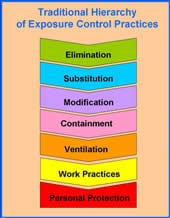
Wednesday, May 28, 2008
Online tool to check hearing protection
To help you get the most from your hearing protectors, researchers at the National Institute for Occupational Safety and Health’s (NIOSH) Pittsburgh Research Laboratory developed QuickFitWeb, an online tool to check your hearing protection in a minute or less.
To read more about, check the following links:
NIOSH Science Blog entry on the topic
Test and instructions
Subscribe to:
Posts (Atom)

 Posts
Posts


